Tuesday, May 29, 2018

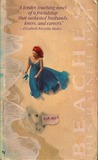
Beaches

BeachesBeaches 
-- Iris Rainer Dart

My rating: 4 of 5 stars

Long long time ago, in a faraway land, I was in the final year of my engineering course. Most of the batchmates were getting our passports made (in a bright eyed anticipation), for which we needed to travel to Chandigarh, where the nearest passport office was located. So, I and one of my best friends, did the same. In that pre-digital age, it sometimes could be a two-day job, and we needed to stay overnight there, which we did at the home of an aunt of hers. Later that night, we ended up watching a movie on the TV. It was about two girl friends, whose personalities, as well as family background, were as different as could be. A chance encounter on the beach as little girls marks the start of their life-long friendship, and they provide strength to each other through all the tribulations of life.

“I can fly higher than an eagle, for you are the wind beneath my wings”

It was a funny and heart-breaking story, and had a deep impact on me. More so, because I was at that stage of life, when friends are our lifelines, and we had the deep sadness of parting looming very close. Few years later, I could not remember the name of the movie, or the actors (the number of English movies I had seen till then were in single digit numbers, low single digit actually!) But, I could not forget the movie, or the song. Then, internet came by, and eventually the search engines and their databases improved a whole lot, and I managed to find not only the name of the movie and the lead actor (Beaches, Bette Midler), but also that it is based on a book!!

The dampener on my excitement was that I could not find a way of procuring that book – amazon and flipkart were a few years away, and popular bookstores were still as bad in terms of inventory. And when it did show up on the radar, it was extremely expensive, being imported and all. Then last year I found that I could also get used books online, with bookchor and amazon having a huge inventory to search from. So, I finally got a copy a few months ago for a very reasonable sum of 150 rs (and I think it is the original paperback edition).

I shared the discovery with the above mentioned friend (we are still very close friends), but though she remembered the visit, she didn’t remember much about the movie or the song. My heart just broke to pieces :,(

So, coming back to the book - I finally read the book over last two days, I just could not put it down. Even though I remembered most of the story, even though the main character was loud and sometimes vulgar, even though it had some predictable sequences, I just loved it. My eyes kept getting moist, shedding a tear or two here and there, whiles sometimes I silently chuckled. Such is the vivacity of Cee Cee Bloom, who brightens up anywhere she goes, who knows that she is amazing and doesn’t shy away from proclaiming it, who can be selfish and cowardly, but is also capable of giving endless, selfless love. And such is the sweetness of Bertie, who frustrates us with her goodness and incomprehensible helplessness, but makes us sympathize with her for the way she is conditioned to be so. And such is the story of a friendship that transcends all boundaries.

Although this can't be called an epistolary novel, the story is assisted by a number of letters exchanged by the two friends over the years (but not all of the letters they wrote). I loved the way their letters expressed their fears and excitement, and evolved as they grew older. 

If you have had a friend who has been with you through good times and bad, or if you have seen the movie and loved it, I highly recommend the book. I recommend it anyway :D (even though my feeling about the book may be biased by what I remember of the movie from all those years ago :)

Thursday, May 10, 2018

Requiem for a Wren

Requiem for a Wren - a love story

What I mean is, the story of my love for the book :)

I first read 'Requiem for a Wren' in early 90's when I came upon it among my father's books in his paternal home, when looking for something I could read - in those days, in the places we lived or visited, books were rather hard to come by. I was in my later teens, and exploring Dad's books in search of reading material [that is how I came to love MacLean and Perry Mason - he had a big collection of those from his (relative) youth!]. It was perhaps bought in 1974, and apparently gifted to an aunt, a cousin of my dad, by a friend. How it came to Dad, neither of us knows now.


Well, to put it briefly, I was completely blown away by it. So much so, that when this was submerged in flood waters for a week (among several other treasures, most of which could not be salvaged), I rescued it, scraped off the mud, and dried it keeping newspaper sheets between each set of pages, and got the edges re-cut by a book-binder. This is why the cover is missing and the date is smudged. Since then, I have read it thrice, and cried every single time.

Later, when I graduated and started working, I desperately looked for a new copy. It was the pre-internet era, and foreign books were impossible to procure. Even after the internet became accessible, and subsequently online bookstores came into the picture, this book wasn't available in India for a long time. After years of searching, I got a friend from US to buy it (and she could only find a used copy), and get it to me on one of her visits here. However, the original one is still so precious to me, that I haven't had the heart to discard it.


The two paragraphs of a poem quoted in the beginning completely enticed me. They held such a pain, and a mystery, of a lost or elusive love, that I read them over and over, and these lines are embedded in my mind and heart forever. Several years later, I was able to find the complete poem - The Triumph of Time, which is something of a saga. It has several beautiful thoughts and lines, but these two paras remain my favorite.

This is what the cover of the original one looked like:

And this is how the cover of my (new) copy looks:

Wednesday, March 21, 2018

The Lady and the Unicorn

The Lady and the UnicornThe Lady and the Unicorn 
  - Tracy Chevalier

My rating: 2 of 5 stars

I liked ‘Girl with the Pearl Earring’ quite well, and was interested in reading more books on a similar theme, since I have an interest in different forms of arts, and always love to know more. When I saw that the subject of this one was a set of medieval tapestries, I read up about these tapestries, and was intrigued – they are exquisite in detail, were neglected for quite a number of years (possibly centuries), and then found and restored. I’m sorry that it is only now that I learnt that these currently hang in Cluny Museum in Paris; I would have loved to see them in person when I spent a few weeks in Paris last year.

The book provides a wonderful glimpse into the process of creation of these fascinating works of art, the working conditions of the craftsmen, and the life in this part of Europe during these times. The labor and effort that goes into making of a single tapestry is quite an eye-opener, and it is heartbreaking to see the poverty of artisans despite their skill and hard work. It is painful that the work that can take the artist or the craftsman months to make, and fill them with such joy despite their hardship, can be casually ignored by the rich patron who commissioned them. The class divide, that was accepted as a matter of fact in that era, appears so unfair today. This was the part of the book I liked, where the author recreates the environment in detail.

The story is told from multiple perspectives, that of the several important individuals in the book. This does not work well – it does not allow for the space to go into depth of the character of any of them, and worse, they all sound the same. In contrast, ‘Girl with a Pearl Earring’ was told in the first person voice of Griet, who was the model for the painting, and it worked well in its favor. I feel that for this book, with the same content, third person narrative may have been better, because it seemed as if different chapters were written about different individuals, and then simply changed to first person narrative of the respective character.

I also found the obscenity in the book unnecessary, and repugnant, particularly the explicit and crude way it was expressed (no spoilers here – it is revealed in the first few pages). I don’t understand why the author felt it necessary to embed it with bawdiness throughout, unless the authors in general have come to think that it is absolutely required to engage adult readers?

* SPOILERS ahead *
With the exception of the lady Genevieve, I couldn’t sympathize with any of the characters – I either hated them, or just didn’t care. Jean Le Viste, the rich patron, is a stereotyped caricature of a pompous and callous man, who bought his way into nobility. I could sympathize with his wife, the lady Genevieve, for her misery and helplessness, and a struggle to keep a balanced appearance. The artist, Nicolas, is a despicable man, an unprincipled womanizer lusting after any woman he sees, including maids, noble ladies and young girls. He is arrogant and insensitive, and believes that the world owes him. I had hoped that being involved in the arduous task of weaving a tapestry would bring out some redeemable qualities in him, but it didn’t. Claude, the young daughter of Le Viste, is a spoilt, selfish girl, lusting after an untrustworthy man (at the young age of 14 too!), and a complete idiot – even with the evidence of his erratic ways right in front of her, she roots for him rather than her maid who had been shabbily treated by him. I fail to see how the mutual feelings of these two extremely self-centered people can be the true, undying love, that the author has portrayed it to be. The blind girl, Alienor, acted quite foolishly, but at least in her case, I can understand the desperation. I also didn’t get why the maid, Beatrice, who was quite sane in the rest of the book, would want to marry Nicolas, knowing all that she did. And most of all, I could not fathom why the fable Nicolas concocted about the unicorn, would entice all the maidens he told it to.
* SPOILERS end *

I wouldn’t recommend this book, unless you can take some cringe-worthy explicit language and scenes in your stride, or you are so extremely interested in medieval arts that you can overlook it.

Wednesday, February 28, 2018

Tears of the Giraffe

Tears of the GiraffeTears of the Giraffe 
  - Alexander McCall Smith

My rating: 4 of 5 stars

I have now read the first two books in the series, and though I am reviewing the second one here, this applies to both of them.

This is an absolutely delightful series, featuring a spunky Precious Ramotswe, who sets up a detective agency as Botswana’s first and only female private detective. The protagonist, Mma Ramotswe, is intelligent and kind; and finding herself on her own after the death of her father, she finds her calling in helping people in distress. The books relate the stories of the cases she undertakes, interspersed with the story of her own life. She handles her cases with abundant common sense and great spirit, helped by her understanding of the ways of the land and its people.

But I must say that I can’t really see them as detective stories – in fact, as a study in mystery solving, they are rather tame. The solutions, and actions required to achieve them, are very simple and straightforward; there are no challenges, and the perpetrators of crimes yield right away.

What then, makes these books so enjoyable? I think that it is the fact that these stories are more about humanity and empathy, and the simple things in life that make it worth being alive. This is demonstrated in the tone – in turns light, amusing, wise, philosophical and profound. Deftly woven in are the description of African landscape, villages, and the life of people in this part of the world. I have never read a book based in Africa, so it was an enriching experience for me to get a glimpse into the African culture and way of thinking. The language is simple and conversational, and I loved the way it makes insightful observations of human nature and truths of life in a down-to-earth manner. It is one of the rare books, that are light without being frivolous, and profound without being highbrow.

What I didn’t like was the ease with which Mma Ramotswe is able to conclude quite a few of her cases – even if we consider them as human interest stories, rather than mysteries – it is highly unimaginable that people who have committed serious crimes can be coerced into confessing or repenting because one lady confronts them and appeals to their better side – that is just not how the human nature works. I enjoy reading the books where the author can tell a wonderful story and convey the underlying feelings and tensions using simple, relatable language, and so I loved the simple and delightful language and tone here, but even so, I felt that the language or thoughts conveyed were too simplistic at places.

Despite these shortcomings, these books can be thoroughly enjoyable once, and can serve as comfort food for the mind.

Saturday, February 24, 2018

Hotel on the Corner of Bitter and Sweet

Hotel on the Corner of Bitter and SweetHotel on the Corner of Bitter and Sweet 
  - Jamie Ford

My rating: 5 of 5 stars

This is a beautiful, touching tale of friendship and love, that moves between two time periods – the past is in 1940’s, and the present in 1986. The protagonist, Henry Lee, is a second generation Chinese American, who has never been to China, and who grew up in the USA in the times of WW2. His relationships form the core of the story, and give the bitter-sweet feeling that the title mentions.

Henry’s complex relationship with his parents present an important cultural aspect – being first generation immigrants, their heart is Chinese, but they dream of an American life, especially for their son. Their internal conflict between their two identities, and the way it impacts their son, is something that most Indians of our generation can understand and identify with. His father’s efforts for the Chinese cause, and hatred of the Japanese, his imposing on Henry to speak only English (which neither of the parents understand), and yet complete his education in China, his mother’s constant and quiet efforts to placate the father and son, and the expectation of both of them that Henry unquestioningly obey his father’s wishes - their interaction offers a glimpse of the traditional Chinese family values and norms. The nuances are beautifully described, and wonderfully woven into the story.

Henry’s unlikely friendship with the local, black, Jazz musician Sheldon is full of warmth and compassion, and results in a lifelong brotherhood. Not only does Sheldon stand by young Henry, when he has no support from any other corner, he also introduces Henry to music that anchors him through the most difficult times in his life. Even though I have no understanding of Jazz, I could feel the beauty of the music, and loved the way it describes the Jazz scene in Seattle.

The friendship between Chinese-American Henry, and Japanese-American Keiko, forms the main thread in the story. Thrown together as kids in a school where they are isolated from everyone else, they forge a bond that grows stronger with time and adversity. I feel that it was primarily due to Henry’s loyalty and kindness that this relationship grew into a tender, unspoken love, and withstood the challenges faced by them. He stands up to his father who harbors a deep-rooted hate for the Japanese, and despite the threat of severe retribution, helps Keiko and her family.

It is quite unusual to find a WW2 story, that has a backdrop other than Europe. All the books on this theme that I had read so far, were set in England, France, Italy or Germany. In that aspect, it was a new learning for me. All the stories I had come across were from the allies’ point of view, so I did not have an idea of what the people from the other side went through. For Germans or Italians (and ultimately, the Japanese, of course), it was understandably a very horrific time, for the war was actively fought on their territory. However, the suffering of the people who were away from the actual scene of war, is relatively unknown. I am rather ashamed to admit that I had no idea of how the USA – the nation that prides itself in the idea of freedom and equality for all – had treated people of Japanese origin during the war. They faced racial abuse, and were later interned in labor camps. These included second and third generation Japanese, who had only ever identified themselves as Americans. The camps were not as terrible as the Nazi concentration camps, but they certainly were no picnic, and the author may have portrayed a lighter picture of the reality.

Also woven in the story are the relationships Henry shares with his wife, and his son and son’s fiancé. His wife had died shortly before the story opens, and this aspect is therefore in retrospect, and gives a moving account of his devotion. The way his relationship with his son, Martin, evolves in the course of the story is heart-warming. Throughout, Henry comes across as a kind-hearted and generous person, who you can’t but help feel for.

One glaring loophole that the book had was the mention of an internet support group in 1986 (that was presumably accessible to the public, since Martin was a part of it). Other than this, where I found the book lacking was a closer look into Keiko’s life. Whereas Henry’s family life is closely examined in nuanced detail, we get to see that of Keiko only from outside. It is possible that the author portrayed it as a happy, ideal family with no tensions to lend interest to the story, though I feel that would have added depth. I would have really liked to know about what happened to Keiko after the war.

At times, the relationships and events described in the book are not entirely believable (not going into more detail to avoid spoilers), but overall the story is very engaging and deeply touching. It takes you on an emotional roller-coaster ride of hope and desperation, rejection and warmth, loss and love, as it traverses seamlessly between the past and present.

Monday, February 19, 2018

Five Quarters of the Orange

Five Quarters of the OrangeFive Quarters of the Orange
  - Joanne Harris

My rating: 4 of 5 stars

This was my third Joanne Harris book, after Chocolat and The Lollipop Shoes. It follows the same rich, evocative style that I found so compelling in the previous two books. Once again, culinary art forms an integral part of the story – recipes, ingredients, and the entire process of creation of the scrumptious-sounding delights – I feel that I can almost get a whiff of the aroma, and taste the flavor. The description of the French countryside is vivid, and makes me want to explore these small, sleepy villages and towns along the river. And the story is poignant, rather heartbreaking.

The story is told in a first-person narrative, alternating between two time lines – when the narrator was about 9 years old, and when she has crossed to the other side of 60. I find Joanne Harris a brilliant story-teller – while in the previous books she juggled multi-person narrative with great skill, in this one, she switches between two time periods effortlessly and seamlessly

The earlier part of the story is set against the backdrop of WW2, in occupied France. It does not focus on the major events in the war, but how it impacts a small village on the sidelines. The focus is more on relationships – a strained relationship between a mother and her children, changing dynamics between siblings who have completely different temperaments, trust and secrets between friends, and empathy between French children and a German soldier. A whole range of emotions are sketched with a wonderful attention to nuanced details.

This is a bitter-sweet story, (though more bitter than sweet) of loss and heartbreak, with glimpses of hope and warmth. Throughout her childhood, the narrator shares a mostly antagonistic relationship with her mother. The mother seems to be rather hard on children, we can understand a part of her difficulties in raising three children alone after the death of her husband in the war; but it is only much later that we, along with the rebellious daughter, come to know of the other demons that she had been fighting. Children, on the other hand, in their naivete and in the absence of understanding from the mother, deliberately hurt her. It’s so painful to watch that you want to shake some sense into them, even as you want to shout out to the world to see the futility of war and the importance of empathy

In the current time period, the daughter comes to know her mother, long dead by then, through her journal. It is then, that she regrets her own actions, and not understanding her mother’s challenges and feelings, as well as the love her mother couldn’t show, which had long lasting repercussions. Perhaps the greatest of all losses you can feel is the lost opportunity to right a wrong.

The book had a great start, and probably could have been a 5 star for me, but I ended up rating it at 3.5 or 4. I felt that the suspense was tediously long-drawn – from the very start, it is hinted that “something” had happened in the village, which was catastrophic for her family. Bits of information is given out gradually, however, it is not until the very last pages that the events are revealed in entirety. By then, the wait had been so long that the revelation failed to have the full intended impact. On the other hand, it sorely missed on how the relationship among the siblings evolved (or deteriorated) after these events, and how their relationship with their mother turned out. It was a crucial link between the past and present, but was not given much attention other than a few facts in retrospect.

Sunday, February 04, 2018

Phool ko khaar banaane pe tuli hai duniya

फूल को ख़ार बनाने पे तुली है दुनिया,
  - कुँअर बेचैन

फूल को ख़ार बनाने पे तुली है दुनिया,
सबको अंगार बनाने पे तुली है दुनिया ।

मैं महकती हुई मिटटी हूँ किसी आँगन की,
मुझको दीवार बनाने पे तुली है दुनिया ।

हमने लोहे को गलाकर जो खिलौने ढाले,
उनको हथियार बनाने पे तुली है दुनिया ।

जिन पे लफ़्ज़ों की नुमाइश के सिवा कुछ भी नहीं,
उनको फ़नकार बनाने पे तुली है दुनिया ।

क्या मुझे ज़ख़्म नए दे के अभी जी न भरा,
क्यों मुझे यार बनाने पे तुली है दुनिया ।

मैं किसी फूल की पंखुरी पे पड़ी शबनम हूँ,
मुझको अंगार बनाने पे तुली है दुनिया ।

नन्हे बच्चों से 'कुँअर ' छीन के भोला बचपन,
उनको हुशियार बनाने पे तुली है दुनिया ।

Main usko dhoondh raha hoon

मैं उस को ढूँढ रहा हूँ
  - अजमल सुल्तानपुरी

मुसलमाँ और हिन्दू की जान
कहाँ है मेरा हिन्दुस्तान
मैं उस को ढूँढ रहा हूँ

मेरे बचपन का हिन्दुस्तान
न बंगलादेश न पाकिस्तान
मेरी आशा मेरा अरमान
वो पूरा पूरा हिन्दुस्तान
मैं उस को ढूँढ रहा हूँ 


वो मेरा बचपन वो स्कूल
वो कच्ची सड़कें उड़ती धूल
लहकते बाग़ महकते फूल
वो मेरे खेत मेरा खलियान
मैं उस को ढूँढ रहा हूँ

वो उर्दू ग़ज़लें, हिन्दी गीत
कहीं वो प्यार कहीं वो प्रीत
पहाड़ी झरनों के संगीत
देहाती लहरा पुरबी तान
मैं उस को ढूँढ रहा हूँ

जहाँ के कृष्ण जहाँ के राम
जहाँ की शाम सलोनी शाम
जहाँ की सुबह बनारस धाम
जहाँ भगवान करें स्नान
मैं उस को ढूँढ रहा हूँ

जहाँ थे तुलसी और कबीर
जायसी जैसे पीर फ़क़ीर
जहाँ थे मोमिन ग़ालिब मीर
जहाँ थे रहमन और रसखा़न
मैं उस को ढूँढ रहा हूँ

वो मेरे पुरखों की जागीर
कराची लाहौर औ कश्मीर
वो बिल्कुल शेर की सी तस्वीर
वो पूरा-पूरा हिन्दुस्तान
मैं उस को ढूँढ रहा हूँ

जहाँ की पाक पवित्र ज़मीन
जहाँ की मिट्टी ख़ुल्द-नशीन
जहाँ महराज मोईनुद्दीन
ग़रीब-नवाज़ हिन्द सुल्तान
मैं उस को ढूँढ रहा हूँ

मुझे है वो लीडर तस्लीम
जो दे यक-जेहती की तालीम
मिटा कर कुम्बों की तक़्सीम
जो कर दे हर क़ालिब एक जान
मैं उस को ढूँढ रहा हूँ

ये भूखा शायर प्यासा कवि
सिसकता चाँद सुलगता रवि
हो जिस मुद्रा में ऐसी छवि
करा दे अजमल को जलपान
मैं उस को ढूँढ रहा हूँ

मुसलमाँ और हिन्दू की जान
कहाँ है मेरा हिन्दुस्तान
मैं उस को ढूँढ रहा हूँ।

Ashaar mere yun to zamane ke liye hain

अश्आर मिरे यूँ तो ज़माने के लिए हैं
  - जाँ निसार अख़्तर

अश्आर मिरे यूँ तो ज़माने के लिए हैं
कुछ शे’र फ़क़त उनको सुनाने के लिए हैं

अब ये भी नहीं ठीक कि हर दर्द मिटा दें
कुछ दर्द कलेजे से लगाने के लिए हैं

आँखों में जो भर लोगे, तो काँटे-से चुभेंगे
ये ख़्वाब तो पलकों पे सजाने के लिए हैं

देखूँ तिरे हाथों को तो लगता है तिरे हाथ
मन्दिर में फ़क़त दीप जलाने के लिए हैं

सोचो तो बड़ी चीज़ है तहजीब बदन की
वरना तो बदन आग बुझाने के लिए हैं

ये इल्म का सौदा, ये रिसाले, ये किताबें
इक शख़्स की यादों को भुलाने के लिए हैं।

Friday, February 02, 2018

Ek gadhe ki atmakatha


एक गधे की आत्मकथा (Ek Gadhe Ki Atmakatha)एक गधे की आत्मकथा 
  - Krishan Chander

My rating: 4 of 5 stars

In this book, the author takes a look at the human nature, our society and our governance system. Seen through the eyes of a non-human protagonist - a donkey, it is an objective commentary that is at times humorous, at times satirical and some times philosophical. 50 years after it was first published, it is still relevant - it is a sad truth that the issues it highlights still ail our society.

It is a short book, easy to read and thoroughly enjoyable. And the language is exquisite, without the use of overly complex Sanskritized words that are difficult to understand. It is also a wonderful example of how humor can be written in classy language, it does not need to resort to cheap gimmicks, as has been the more recent trend.

Sharing a couple of the most poignant lines in the book:
- एक हिंदू या मुसलमान गधा हो सकता है पर एक गधा हिंदू या मुसलमान नहीं हो सकता।
- बड़े आदमी के जमाई के लिए बुद्धिमान होना ज़रूरी नहीं। उसकी उन्नति के लिए यही काफी है की वह एक बड़े आदमी का जमाई है.